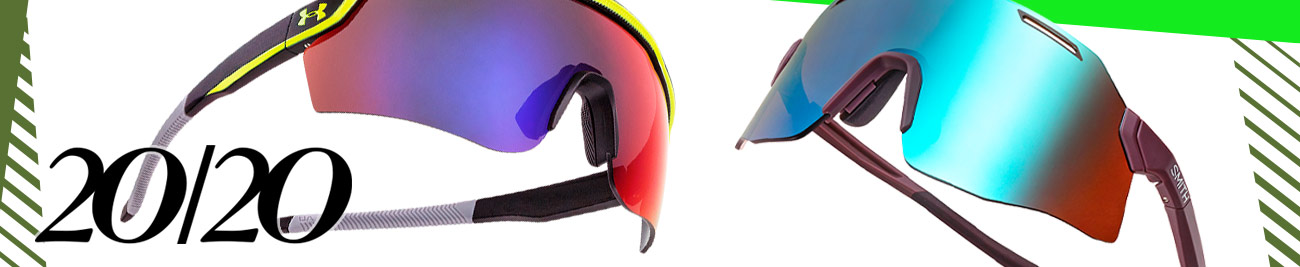



They're stylish, edgy, virtually shatterproof and ANSI safety certified.
Sounds like an unusual combination, especially when describing a
fashionable sunglass. Yet it’s probably the best way to think about them
since it’s likely that your sunglasses
will be required to deliver some special functionality at some time in its life
on behalf of you. What do I mean?
Fashion drives so much of the development and design of eyewear. Yet when
thinking about functionality combined
with fashionable sunwear, those sunglasses must be able to tackle any activity you will, and still elicit plenty of "nice
shades" comments. So, what are the
attributes required for this, how can you
identify them and what must you know
about ‘safety’?
Think Safety
Most manufacturing companies have
OSHA-specified eye safety programs,
safety officers and/or pay for the work-place eyewear that employees use on the
job every day. As a result, workplace eye
injuries have decreased by nearly two-thirds since 1989. So why should you
make sunwear Safety Sunwear?
More than 40 percent of disabling eye
injuries occur at home, during sports and
while pursuing that outdoor passion.
This high rate of injury is because most
people are unaware of the potential hazards that surround them. It is best to
have comprehensive protection for whatever comes your way. So, if a pair of sunglasses is designed for the worst, it’s
ready for any situation.
High speed—Racing comes to mind.
That may be in a car, on a bicycle, sky-diving, hang-gliding, parasailing, skiing,
boarding, running or flying to name a few.
Speed exposes your eyes to anything
that might be in the way. One wouldn’t
think about skydiving without goggles but
might ride a bicycle at over 30 or 40
miles an hour (downhill) without glasses.
Flying debris—Debris could come flying at your eyes instead, rocks will hit
your windshield while driving. When on a
bicycle, motorcycle or lawnmower, the
force of the rock thrown up at your face
and eyes can be traveling at more than
60 miles an hour. It will break the frame
and the lenses so look out.
Wind and humidity—Do your eyes tear
in the wind when downhill skiing, is that the
time when clear vision is critical? Do you
need to keep the moisture out from behind
the lens; will sweat cloud vision at the
wrong time?
From bright to shadow—Light intensity changes all around you and seeing
crisply is regulated by your pupil. It
always adjusts to allow the right amount
of light—yet it’s easy to have too much
light. Think of the reflections off the pavement on a sunny day. It causes squinting
and obscures vision. A light-adjusting
lens is safer.
Surface reflections—Reflected light
off a horizontal surface becomes
polarized and is intensified until the reflection is blinding. Is there a hole in the road
coming up or will there be an animal or
child in the way? Consider polarized lenses to ensure that you and the people
around you are always safe.
Ballistic—Lastly, if a pair of glasses
can save your life in the most traumatic of
situations, then you can feel protected
when that windshield shatters and the
shrapnel is flying in all directions. Lenses
tested with a 15 to 25 caliber projectile
can keep your eyes safe.
So how can one make a sunglass safe
for almost any situation? The answer is in
the way that industry has significantly
reduced on-the-job eye accidents. They
have had all employees on the job floor
wear safety eyewear. That means that
safety certified sunwear can be just as
effective if everyone wore them. Therefore,
only consider sunwear that can also pass
the safety test.
What Constitutes a Sunglass
Meeting the ANSI Z87 Safety
Standard?
To protect for sun and safety, both the
frame and the lens must be safety certified. In this case, the frame, unlike dress
eyewear, takes on as much importance
as the lenses.
The ANSI Z87.1-2003 high impact
safety standard
If both the frame and lens require certification, what does that mean? The
answers lie in the requirements set forth
in an industrywide agreement called ANSI
Z87.1-2003.
About every 10 years, the American
National Standards Institute (ANSI), a private nonprofit organization, reviews ANSI
standards. Z87.1 defines Occupational
and Educational Eye and Face Protection.
This standard has testing criteria for
both frames and lenses and two levels of
performance are defined; Basic Impact
and High Impact. For example, in addition
to the high mass and high impact tests,
the frame must have the ability to retain a
2.0 mm plano lens under high impact (not
just a 3.0 mm plano) in order to earn the
High Impact label. Also, prescription lenses must meet stringent standards. Here is
a short example of Z87 requirements, for
more details a complete copy of the standard can be ordered from ANSI directly at
www.webstore.ansi.org. Frames that are
labeled “safety certified” meet these very
stringent requirements.
Frames
High Mass Impact and Retention
Test—Pointed projectiles (500 g) are
dropped 50 inches. Four samples must
be tested and for all, no piece shall be
detached from the inner surface of any
frame component, and the test lens shall
be retained in the frame.
High Velocity Impact and Retention
Test—A steel ball (0.25 in) at 150 ft/sec
velocity hits the frame. No contact with
the eye of the head form is permitted as
a result of impact. 20 samples must be
tested of any frame component, and the
test lens (2 mm poly plano) shall be
retained in the frame.
Flammability—The front, temple, lens
and removable side shield (if applicable)
shall not burn at a rate greater than 76
mm (3 in) per minute.
Lenses
Prescription and Removable Plano
Lenses-Basic Impact—Spectacle lenses
shall be not less than 3.0 mm thick,
except prescriptions that are +3.00D or
greater in the most plus meridian in the
distance portion of the lens which shall
have a minimum of a thickness no less
than 2.5mm. Spectacle lenses shall be
capable of resisting impact (drop
ball) from a 1 inch diameter steel
ball dropped from a height of
50.0 in. The lens shall not
fracture as a result of
this test.
High Impact—When used in
a frame marked Z87-2, the
lenses shall not be less than
2.0mm thick, be capable of
resisting an impact from a 0.25
in diameter steel ball traveling at
a velocity of 150 ft/sec. No piece
shall be detached from the inner surface of the lens. In addition, the lens
should not fracture.
Penetration Test
(Plastic Lenses
Only)—Plastic
spectacle lenses
shall be capable
of resisting penetration from a
weighted projectile weighing 44.2
gm dropped from a
height 50.0 inches. The
lens should not fracture or
be pierced through as a result of this test.
Optical Quality—Lenses shall be optically correct when measured for Prismatic
Power, Refractive Power, Resolving
Power, Haze, and Transmittance. The
optics need to be precise in order to
meet ANSI Z87 optics. (Note: optical
characteristics may behave differently in
the uncut and glazed versions, be sure to
see test results for lens quality when
glazed in their respective frames.)
Transmittance—Lenses shall comply
with standard requirements for clear or
general-purpose filters or special purpose
lenses. The lens shade marking is determined by the light transmission or type of
special purpose lens.
Look for the Markings
to Know for Sure
Frames that pass the retention tests are
stamped with the manufacturer’s mark
and “Z87” or ”Z87-2”. If the frame is
intended for plano, it is marked Z87. If intended for both plano and prescription
lenses, it is marked Z87-2. Therefore, for
fames carried in a dispensary, where many
customers will want prescription options,
it makes sense to look for the Z87-2
marking. It adds flexibility to inventory
and increases the opportunity for sales.
Lenses
In a safety certified clear or sunglass,
lenses are marked permanently. The different designations help the optician
show their customers that lenses fabricated will meet either the Basic or High
Impact test.
1) For Removable Lenses, the markings
are as follows: The mark or logo indicates
or identifies the manufacturer and compliance with Impact Testing Requirements.
An example of this is WX. The lens was
supplied and tested by Wiley X and meets
the Basic Impact Lens requirement. If the
mark were WX +, then the supplier again
is Wiley X and the “+” sign describes the
lens as being compliant with High Impact
lens requirements.
2) For Non-Removable Lenses, the
markings are as follows: Only one marking on the frame front or one of the temples is required. As before, mark or logo
indicates or identifies the manufacturer.
The Z87 indicates compliance with the
ANSI safety standard, there is a letter
shade number, and a “+” indicates that it
meets the High Impact Testing requirements. An example of a non-removable
lens would be: WX Z87 S+ and would
translate to Wiley X (WX), ANSI Z87
frame (Z87), special purpose lens (S) or
shaded, High impact lens (+). Photo-chromics are also allowed and designated with the letter “V”.
Safety is technical and complicated so
relying on the dependability of a sunglass
to meet the safety requirements requires
that it be properly marked. Wiley X is
unique in the marketplace in that it is the
only company that supplies all of its
sunwear, Safety Certified.
Patients respond to discussions about
protection of their eyes especially when
combined with a pair of frames that they
agree they look good in. After all, fashion
and function must both work wonderfully
together to make a difference in a new
pair of eyewear for a patient to say “wow”.
The Safety Certified Sunglass
Either plano or in a prescription, completed eyewear bears the high impact
standard. And, when in plano, the more
stringent standards for plano lenses are
also met. During fabrication, lens and
frame testing has been completed (statistical sampling done when allowed) and
markings placed on frames and lenses.
The lenses are tested to withstand
impact from a .25 inch steel ball shot at
150 ft/sec so look for the manufacturer’s
mark and “+” sign on the lens that
denotes high impact testing. In addition,
special tints and photochromics are
marked. Colors and their filtering properties are described and all comply with
traffic signal recognition requirements.
Any special sports related requirements
are also defined.
Frames must have the ability to retain
a 2 mm lens under high velocity impact
(.25 inch steel ball shot at 150 ft/sec).
While it may be easier to pass the retention test with a 3mm lens, these lenses
would appear too thick for street wear so
all frames pass with 2mm lenses. All
frame parts marked with Z87-2 say
they’ve been tested at high velocity
impact and both prescription and plano
lenses glazed into this frame meet the
requirements.
Other attributes of the frame provide
critical protective properties. Wide temple
designs surround the eyes while blocking
glare from multiple directions. Wrap
styles provide the tightest fit and best
coverage.
When a seal is required against wind
and moisture, a facial cavity seal provides
ventilation behind the lens without maintaining a wide space behind the frame
where other wind, dust and debris can
attack the eye. Lastly, for patients with dry
eye syndrome, a sealed pair of glasses
can better manage the patient’s condition
and make them a lot more comfortable. It
may become an important factor in maintaining good eye health.
The insert has been designed for easy in
and out by consumers, again adding flexibility of use and performance.
The Safety Prescription
The prescription, prism compensation
for wrap, the bevel and Z87 testing are
critical components of a safety sunglass.
A few labs are set up to test for Z87
compliance. To fabricate Z87-2 Wiley X
prescription sunwear and test prescription lenses for Z87-2 compliance, Hoya
Lens (Bethel, CT) and Pech Optical
(Sioux City, Iowa) provide prescription lab
work. Consult with the lab for lens and
power range by frame design to ensure
that your patient can be fit.
Lens materials and protective properties are assured by the lab’s choice of
highly impact resistant lens materials like polycarbonate and Trivex. In this case,
consult with the lab for approved lens
materials and progressive lens brands.
Make Sun & Safety Work
For You
When shopping for sunglasses, what
are patients really looking for? To best
answer the question, you must know
where they are really wearing sunwear.
Therefore, it’s more about what patients
can teach you about their eyewear needs.
When patients know what they want
and have experienced a need, they can
tell you about them. For others, it
requires you to take control and ask the
right questions. Remember that biker
that was in the other day. His need is
specific. At high speed, his eyes need to
be protected from the wind, rain, road
debris, dust and varying sun conditions
without requiring frequent stops to
change eyewear. Your ability to create the
right combination using the best color, a
photochromic polycarbonate lens, sealing
sunglass means that his exact needs
have been met and that’s worth more to
most patients. Lastly, when describing
this pair of glasses as safety certified,
you will find that real safety is differentiating. It provides a steady stream of enthusiasts, in both plano and prescription
work. It responds to the outdoor needs
of all patients, boosts your public and
professional identity and meets the “duty
to warn” requirement.
Patient Specific Benefits
Often, the hardest part about dispensing is knowing what to say when patients
want to know what is the difference
between a sunglass they can buy in a
sports store or at the car wash. Here are
three areas that safety certified sunglasses
exceed any customer’s expectations.
There’s no such thing as an all-purpose lens in sports eyewear. The material, treatment and color must meet the
most extreme of conditions the lens will
be subjected to.
High Velocity Protection—When a
sunglass is good for the most difficult of
situations, it’s better for all other less difficult ones. By providing high velocity protection, the lenses and frame withstand
high-speed impact from rocks, gravel,
wind, dust and anything else that life
throws at you.
That goes for the visible as well as
the invisible. Ultraviolet radiation
(UVB and UVA) travels fast and is
invisible. The UVB causes burning
(sunburn) and UVA ages the skin
and when accumulated over a lifetime, can cause skin cancers and
cataracts. Look for sunwear that is 100
percent UV absorbing.
In addition to meeting the ANSI Z87.1
and Z80.3 sunglass standard, the tactical
series of frames meets the military’s MILV-43511C fragmentation standard for
goggles and MIL-PRF-31013 fragmentation standard for spectacle protection.
Vision Is Crisp and Clear—Lens
quality and filtering ability provide the
clear vision and the correct amount of
light in any critical situation.
Add AR to the back of sunlenses to
reduce the brightness and virtually eliminate back surface reflections that can be
distracting at a critical moment. Use front
surface mirrors to further reduce glare in
extreme conditions like high altitude, on a
snow field, in extreme sun brightness and
when required to look at the sky (think
skeet shooting).
Polarized lenses absorb surface reflections of water and the street or track and
make vision clear at all times. If you are on
a motorcycle, a light activated lens (photochromic) has the best utility, especially
when traveling on bright sunlit highways or
through more shadowed city streets.
Great At High Speed— At 130 miles
per hour, surface reflections that are
blinding can be deadly. For that matter, at
50 miles per hour it’s the same, so polarized lenses are always recommended.
Be sure that the frame is wrapped
enough when there is a wide temple to
allow the widest field of clear vision for the
job that it has to do. The visibility of your
entire world is critical. Also, consider using
colors of lenses that match the field’s
background. In this way, the contrast of
objects in the field is enhanced. In the
case of track racing, the lens color should
be tuned for vision at high velocity.
Seeing Through the Fluff
While others may claim
that they provide the same
protection, you can
demonstrate the difference
to staff and patients. Make
safety certified and authorized sunwear a critical part
of every sale. Sell products whose manufacturer
is so passionate that the
details of design and function are patented and use
those features when
describing the advantages
and benefits to wearers.
Conclusion
Remember, 90 percent
of eye injuries can be prevented with the right eye-wear. Be sure to combine great style and
function. When you do that, eyewear or
sunwear better meets any patient’s
needs. |